Safety and Cybersecurity in European Robotics: Compliance Without Killing Your Line

If you build or run factories in Europe, you’re no longer just buying robots.
You’re buying into a safety and cybersecurity regime that can shut your line down if you get it wrong.
That sounds heavy.
But the real problem isn’t the regulations themselves.
It’s when compliance is bolted on at the end – after the robot is bought, the cell is built, and production is already at risk.
CNN Robotics approaches it the opposite way: design the system so that compliance is the natural outcome, not an afterthought.
What Europe really expects (beyond the buzzwords)
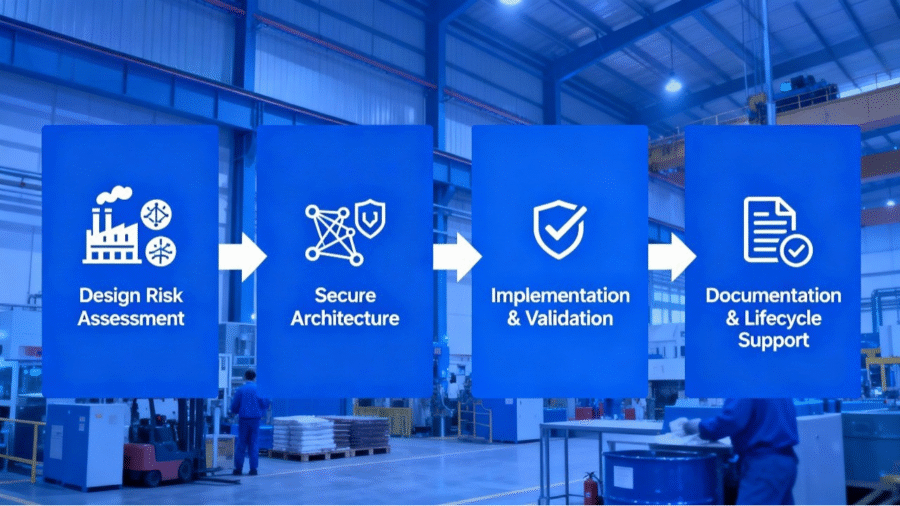
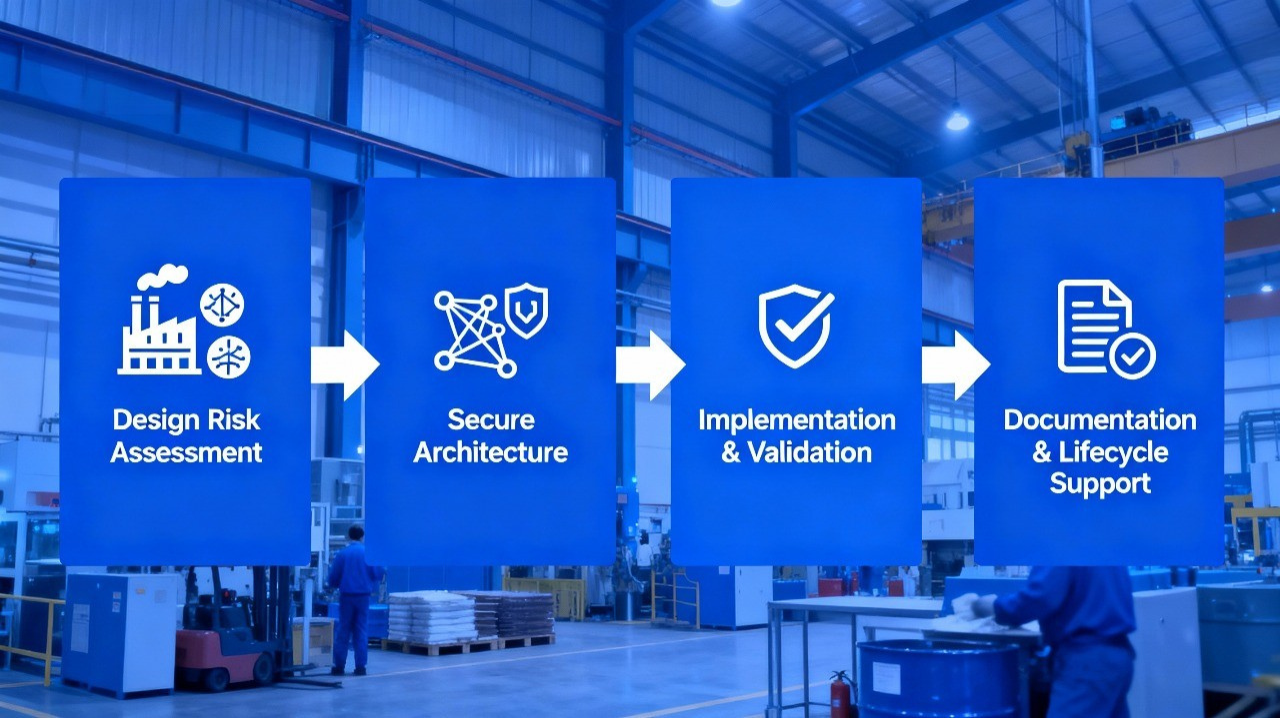
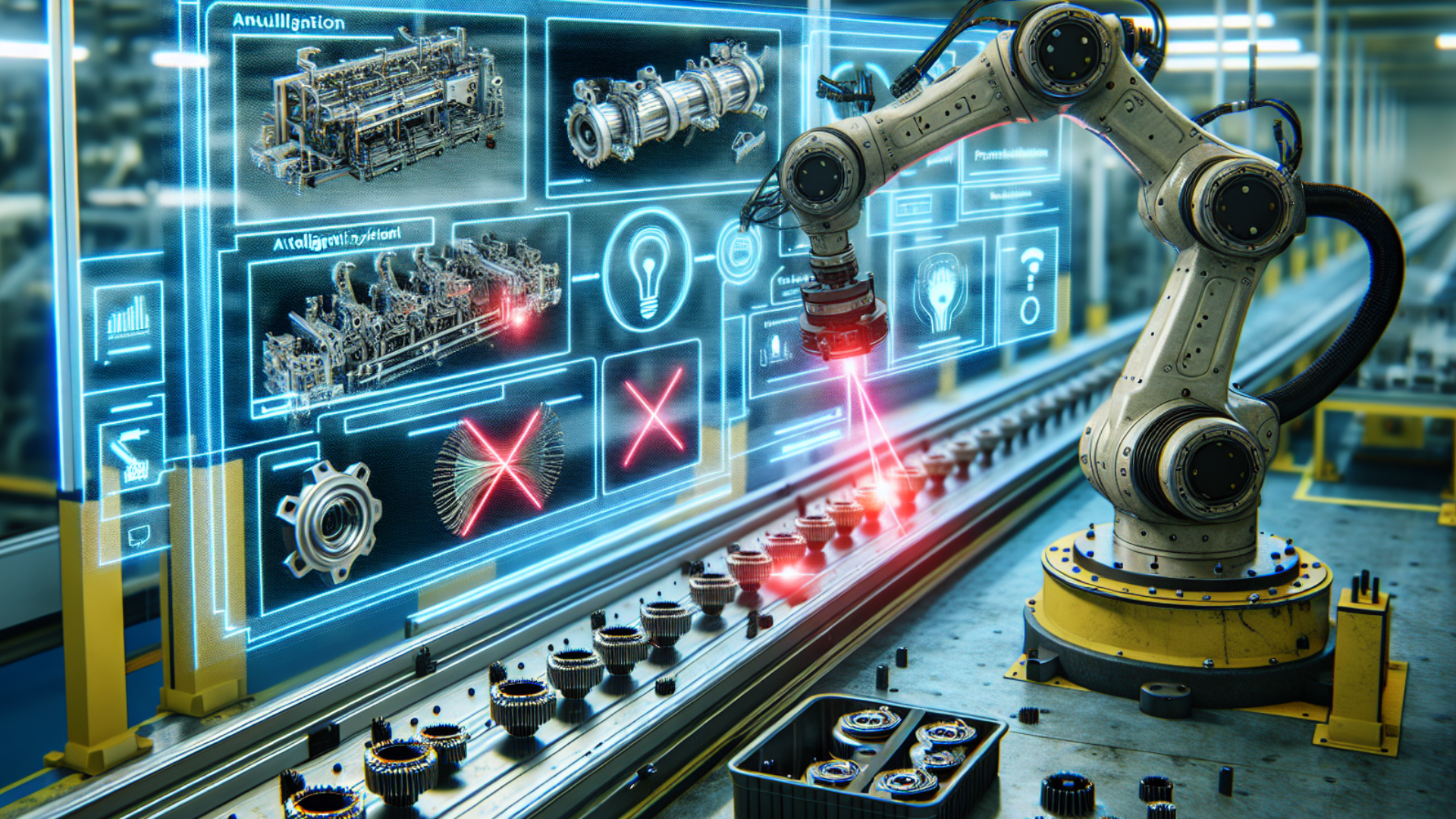
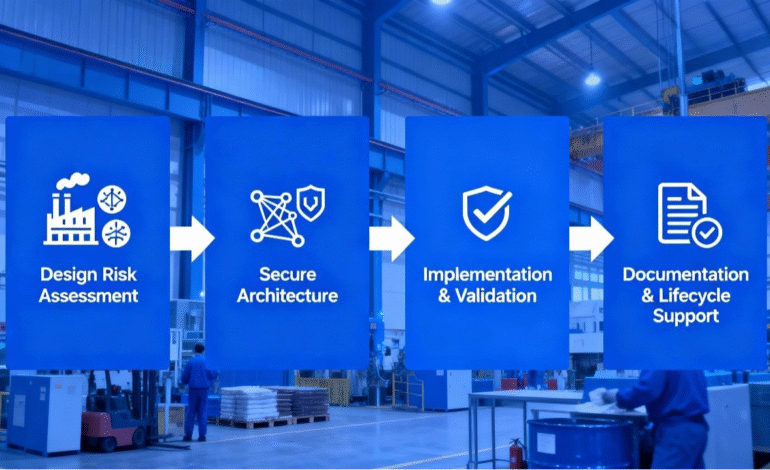
(CNN Robotics’ compliance lifecycle: Integration from design through ongoing support)
You’ll see a lot of acronyms on slide decks: EN ISO 10218 : 2025, ISO/TS 15066 for collaborative applications, CE marking, NIS2, Cyber Resilience Act, and so on.
Strip them down and they’re all asking three simple questions:
- Can this system hurt people?
- Can someone break into it – digitally or physically – and cause damage?
- Can you prove you took this seriously?
That’s it.
- EN ISO 10218 : 2025 sets the bar for how industrial robots and cells must be designed, safeguarded, and validated.
- ISO/TS 15066 (now baked into updated standards) forces you to think about real human–robot interaction: speeds, forces, where a cobot can safely share space with a person.
- NIS2 and the EU Cyber Resilience Act say your connected devices and control systems must be built and maintained with security in mind, not left open with default passwords and unpatched firmware.
Compliance is no longer “tick the box and move on.”
It’s tied to how you architect the entire system.
The risks we keep seeing on factory floors
Here’s where European manufacturers and integrators usually get into trouble.
1. Safety designed around the robot, not the application
Most projects start with: “This robot is collaborative; it’s safe.”
But standards don’t certify robots in isolation—they care about applications.
Common traps:
- A cobot arm with a sharp tool or heavy part still capable of injuring at low speed.
- Guarding designed for “ideal” movements, not what actually happens when parts jam or someone overrides a setting.
- No clear zoning: a single emergency stop for a whole line instead of smart, segmented safety.
Result: external audits find gaps; risk assessments must be redone; sometimes the whole cell needs mechanical and electrical rework.
2. OT networks built like it’s still 2005
Many factories still run flat networks: robots, PLCs, HMIs, cameras, and office PCs sitting on the same VLAN with shared credentials. Under NIS2 in 2025, that is already a serious compliance and business‑continuity risk; and with the EU Cyber Resilience Act (CRA), set to make cybersecurity requirements mandatory for connected products toward the end of 2027, the bar will only rise further.
Typical issues:
- Remote access via unprotected VPNs or vendor laptops.
- Controllers reachable from the wider corporate network without segmentation.
- No inventory of which devices run which firmware or have known vulnerabilities.
One breach, even through a “simple” OT device, can mean downtime, data exposure, and mandatory reporting to authorities.
CNN Robotics is preparing customers for that future now – designing segmented architectures, secure remote access, and hardened controllers so that when robots or other automation are integrated at the OT/IT level, they do not become the weakest link in the factory’s cybersecurity posture.
3. Documentation and ownership are missing
A line can be physically safe and reasonably secure, but if nobody can show:
- A current risk assessment,
- A list of standards applied,
- Who owns cybersecurity for that cell,
then you’re relying on luck during audits and incidents.
We see this gap often in multi‑vendor projects: robots from one OEM, conveyors from another, vision from a third, integration by a small SI, and no single owner for “safety + cybersecurity + performance.”
How CNN Robotics builds compliance into the integration, not on top of it
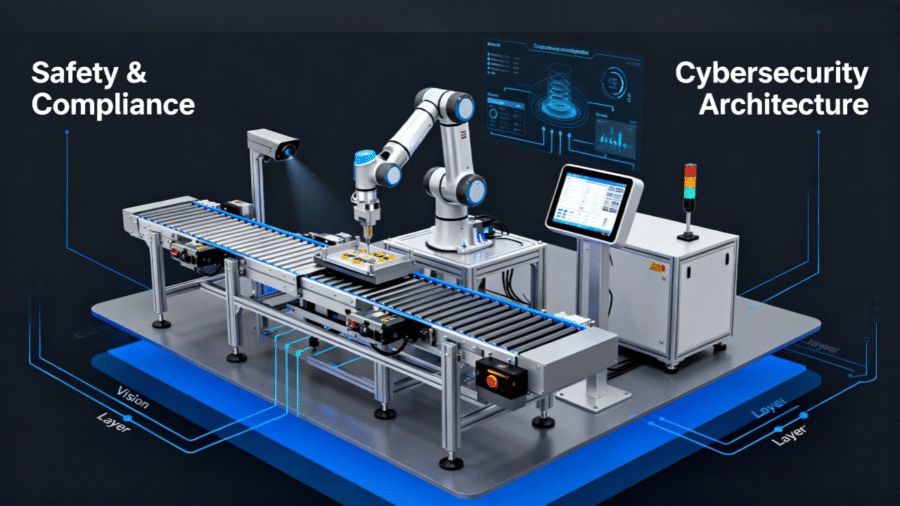
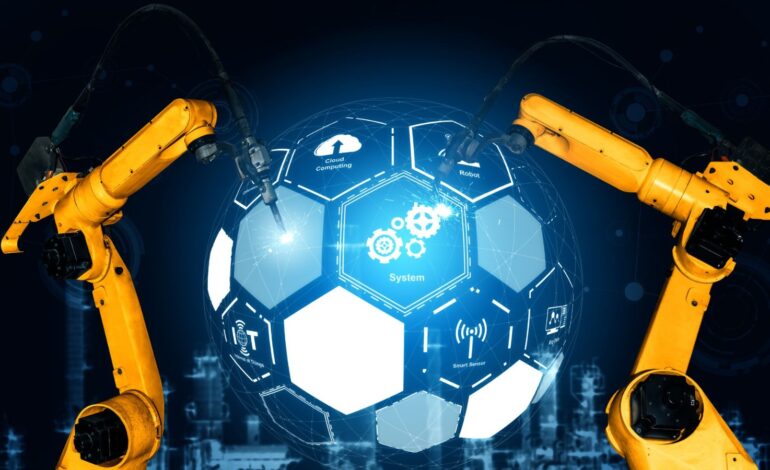
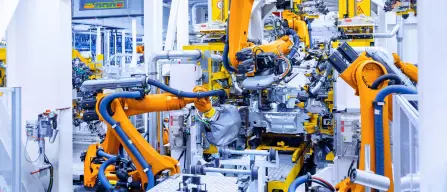
(Integrated robotics automation: Safety, cybersecurity, and operations unified from design through deployment)
CNN’s work in Europe starts from a simple rule: if we can’t stand behind safety and cybersecurity, we shouldn’t be deploying the system.
That shapes how projects are run end to end.
1. Risk assessment is part of design, not paperwork at the end
For every cell, CNN:
- Maps how people, robots, and materials will move and interact.
- Identifies pinch points, sharp edges, payload risks, and abnormal scenarios (blocked conveyors, dropped parts, manual interventions).
- Chooses safety functions—safe speed, safe zones, muting, light curtains, scanners—based on that real usage, aligned with EN ISO 10218 : 2025 and related machinery standards.
The output isn’t just a document for the file.
It’s a blueprint for:
- How guarding is built.
- What safety PLC logic looks like.
- How operators are trained to work around the cell.
2. Treat cybersecurity as another layer of safety
Instead of treating OT security as an IT problem, CNN bakes it into the control architecture:
- Segmented networks: separating robot cells, line control, and office IT to limit lateral movement.
- Hardened controllers: strong credentials, disabled default accounts, and controlled remote access.
- Update strategy: a plan for firmware and software updates that doesn’t break safety or production, aligned with CRA expectations.
The mindset is: “If someone compromises this device, what could they do to people, product, or uptime?”
That drives decisions about encryption, logging, and access control.
3. Compliance‑ready documentation that operations can actually use
CNN delivers not just CE‑friendly paperwork but operational documentation:
- Clear, visual risk assessments operators can understand.
- Safety concept diagrams (zones, devices, safety functions).
- Cybersecurity basics: what is allowed, what isn’t, how to request changes, who to call.
This helps maintenance, EHS, and IT/OT teams stay aligned—and makes audits much less painful.
4. Continuous alignment with EU trends, not just current rules
Safety and cybersecurity in robotics are evolving quickly.
Recent updates emphasize:
- Moving from “cobots are safe by default” to collaborative applications that must be evaluated in context.
- Treating cyber‑physical risk (hacked robots, manipulated safety systems) as part of the overall functional safety and risk assessment process.
- Expecting vendors and integrators to support long‑term vulnerability management, not just installation.
CNN tracks these shifts and feeds them back into templates, checklists, and design patterns so projects stay ahead of where regulations are going, not just where they are.
Why this matters for European manufacturers right now
If you’re planning a new robotics project or upgrading an existing line, three questions are worth asking before you sign anything:
- Who is responsible for the overall risk assessment and CE package?
If the answer is “everyone a little,” you may end up owning the gaps. - What is the cybersecurity model for this cell or line?
If you hear “we’ll tunnel in if needed” without a network and access design, that’s a red flag in a NIS2/CRA world. - How will this system stay compliant five years from now?
Standards will evolve, vulnerabilities will appear. You need partners who design for change, not just for day one.
CNN Robotics’ stance
CNN Robotics is not in the business of selling “fast robots with fine print.”
The brand exists to build integrated, compliant, future‑proof automation that European factories can trust.
That means:
- Taking responsibility for how safety, cybersecurity, and performance fit together.
- Giving plant managers and EHS teams clarity instead of surprises.
- Designing lines where operators feel protected, IT/OT feels heard, and leadership can sign off on audits without losing sleep.
If your next robotics project needs to hit European safety and cybersecurity expectations without killing flexibility or uptime, it might be time for a deeper integration conversation—not just another equipment quote.